
A signature sound is a recognizable musical identity built through consistent patterns in song selection, energy, transitions, genre preferences, and audience experience. DJs develop a signature sound when listeners can identify their style within seconds, creating stronger audience recall, recognition, and long-term loyalty.

Image Credit: Spencer Imbrock / Unsplash
Introduction
A crowded venue hears fifteen seconds of music.
Nobody sees the DJ booth.
Nobody checks the event flyer.
Yet people already know who is playing.
That level of audience recognition is one of the strongest advantages a DJ can build.
A signature sound is a recognizable musical identity created through consistent patterns in song selection, emotional energy, genre preference, transitions, and audience experience. DJs with a strong signature sound become recognizable because listeners develop familiarity, recall, and recognition over time.
Many DJs spend years improving technical skills while remaining difficult to remember. Meanwhile, artists such as Black Coffee, David Guetta, Calvin Harris, and Diplo built careers around recognizable musical identities that audiences can often identify within seconds.
According to the IFPI Global Music Report 2025, streaming platforms continue to strengthen long-term artist discovery and audience engagement, making musical recognition more valuable than ever.
The deeper question is no longer:
“How do I sound different?”
The deeper question is:
How do audiences remember me?

RELATED BLOG POSTS
- HOW DJS CAN USE MUSIC BINGO TO KEEP CROWDS ENGAGED BETWEEN SETS
- THE DJ’S GUIDE TO HOSTING A MUSIC GAME NIGHT AT A BAR OR VENUE
- HOW TO READ A ROOM AS A DJ: THE MUSIC BINGO METHOD
- HOW MUSIC TRENDS HAVE EVOLVED IN THE LAST DECADE
What Is a Signature Sound in Music?
A signature sound is a collection of recurring musical characteristics that audiences consistently associate with a specific DJ, artist, or music brand.
Those characteristics can include:
- Genre choices
- BPM preferences
- Vocal styles
- Emotional atmosphere
- Transition patterns
- Energy progression
A recognizable musical identity is not necessarily tied to production.
Many DJs build powerful signature sounds through curation alone.
Listeners often remember emotional experiences before they remember individual songs.
That is why audiences frequently identify Black Coffee through mood and atmosphere while recognizing David Guetta through high-energy festival-driven progression.
Recognition develops from repeated exposure.
Repeated exposure develops familiarity.
Familiarity develops recall.
Why Do Some DJs Become Instantly Recognisable?
The most memorable DJs create audience recognition through a process called the Audience Recognition Loop™.
The Audience Recognition Loop™
- Consistency
- Familiarity
- Recall
- Recognition
- Loyalty
Every successful signature sound moves through these stages.
Consistency Creates Familiarity
Consistency allows listeners to encounter recurring musical patterns repeatedly.
Those patterns may include:
- Similar emotional journeys
- Genre tendencies
- Song selection philosophy
- Energy pacing
The brain processes familiar patterns more efficiently than unfamiliar ones.
Familiarity Creates Preference
Research on the Mere Exposure Effect consistently shows that repeated exposure increases familiarity and often increases preference. Studies examining music preference found that familiarity is one of the strongest predictors of musical liking.
Listeners become comfortable with sounds they repeatedly encounter.
That comfort strengthens audience attachment.
Recall Creates Recognition
Recognition occurs when listeners retrieve previous experiences automatically.
A recurring musical pattern triggers memory.
Memory triggers identification.
Identification creates recognition.
Recognition Creates Loyalty
Audience loyalty often begins when listeners know what emotional experience to expect.
Recognizable DJs reduce uncertainty.
Reduced uncertainty increases trust.
Trust encourages repeat engagement.
How Does Audience Recognition Actually Work?
Audience recognition works through pattern recognition, familiarity, and memory recall.
Humans identify patterns faster than isolated information.
People recognize logos before reading company names.
People recognize voices before identifying speakers.
People recognize recurring musical cues before identifying individual tracks.

Image Credit: Andreas Gücklhorn / Unsplash
Pattern Recognition and Music Memory
Music memory is remarkably durable.
Research examining exposure effects on music preference found that repeated exposure strengthens both recognition and preference over time.
A short vocal phrase.
A recurring melodic structure.
A recognizable transition style.
Each can become part of a listener’s memory architecture.
Platforms such as Spotify and TikTok benefit heavily from repeated exposure cycles because familiarity strengthens recall.
The strongest signature sound often emerges when audiences begin predicting emotional outcomes before they happen.
The Familiarity Effect Explained
The familiarity effect does not require conscious attention.
Studies on music preference repeatedly show that listeners often develop stronger preferences simply through repeated exposure.
This explains why recurring musical characteristics become recognizable even when listeners cannot explain why.
Examples include:
- Consistent melodic moods
- Similar BPM ranges
- Repeated emotional themes
- Familiar genre combinations
The audience may not consciously identify the pattern.
Their memory does.
How Do You Identify the Patterns That Already Define Your Sound?
Most DJs already possess recognizable characteristics.
The problem is that many never document them.
Analyze Your Last 200 Tracks
Export your recent playlists.
Study:
- Genre distribution
- BPM clusters
- Energy progression
- Emotional themes
Patterns often appear immediately.
A signature sound frequently exists before the DJ consciously recognizes it.
For playlist organization strategies, Creating Music Bingo Playlists with Muzingo demonstrates how recurring music selections reveal audience preferences.
Study Audience Reactions
Audience behavior often exposes identity patterns faster than analytics.
Track:
- Repeat crowd reactions
- Social comments
- Song requests
- Recorded event feedback
Repeated audience descriptions are valuable data.
Identify Emotional Consistency
Ask:
What emotional state do people consistently associate with my sets?
Examples:
- Euphoric
- Nostalgic
- Intimate
- Energetic
- Reflective
That emotional consistency often becomes the foundation of a recognizable musical identity.
How Can You Build a Signature Sound Without Limiting Creativity?
Many DJs fear becoming repetitive.
That fear often prevents them from building a recognizable signature sound.
The solution is not repetition.
Take Your Game Nights to the Next Level
Muzingo is a fun game where players listen to music tracks and match them to bingo cards — competing to win prizes with friends.
Play Muzingo FreeNo Card Required
The solution is recognizable flexibility.
Consistency vs Repetition
Consistency means maintaining recurring principles.
Repetition means replaying identical ideas.
A recognizable DJ may consistently deliver:
- Similar emotional outcomes
- Similar audience experiences
- Similar energy structures
Without repeating identical songs.
Evolution vs Reinvention
Recognition survives evolution.
Recognition rarely survives constant reinvention.
Consider Calvin Harris.
His music evolved dramatically across multiple eras.
Yet listeners consistently recognized his melodic structure and accessibility.
The same principle applies to DJs.
Gradual evolution preserves memory.
Frequent reinvention resets memory.
How Can You Tell If Audiences Actually Recognize Your Sound?
Recognition should be tested rather than assumed.
Run Blind Listening Experiments
Create several short clips from your performances.
Mix them with clips from other DJs.
Ask listeners to identify yours.
If audiences consistently recognize your clips, your signature sound already exists.
Measure Audience Recall
Ask listeners one day after an event:
“What part of the set do you remember?”
Repeated answers reveal recognition triggers.
Track Social Language
Analyze recurring comments.
If listeners repeatedly describe your style using similar language, audience recognition is forming.
Observe Repeat Audience Behavior
Returning listeners often reveal recognition strength.
When people describe your experience before hearing your next set, your musical identity is already established.
For audience engagement strategies, Promote Your Music Bingo Event on Social Media demonstrates how audience interaction reveals behavioral patterns.
Why Does Audience Recognition Matter More Than Technical Skill?
Technical skill creates performance quality.
Audience recognition creates long-term value.
| Technical Skill | Audience Recognition |
|---|---|
| Wins attention | Wins memory |
| Improves execution | Builds identity |
| Easier to imitate | Difficult to replicate |
| Creates performance quality | Creates audience loyalty |
A technically impressive DJ without a recognizable signature sound remains vulnerable to replacement.
A recognizable DJ develops audience attachment.
That attachment directly influences:
- Repeat attendance
- Audience recall
- Fan loyalty
- Brand growth
This is where music branding, dj branding, and dj brand identity become commercially important.
Strong recognition reduces audience acquisition costs because listeners already understand what the brand represents.
For additional cultural context, A Deep Dive Into Music Culture: What It Is explores how collective music experiences shape audience perception.
What Can DJs Learn From Music Recognition Games?
Recognition games reveal something traditional performances often hide.
They measure memory.
A signature sound becomes visible when audiences identify recurring patterns quickly and accurately.

Image Credit: Alex Brisbey / Unsplash
Why Recognition Testing Matters
Most DJs evaluate success through applause.
Applause measures excitement.
Recognition measures recall.
Recall often predicts loyalty more effectively than immediate excitement.
Recognition-based environments allow DJs to observe:
- Listener recall
- Familiarity levels
- Pattern recognition
- Music memory
Using Muzingo as a Recognition Environment
Muzingo is an online music bingo experience designed for friends, teams, bars, parties, families, and events.
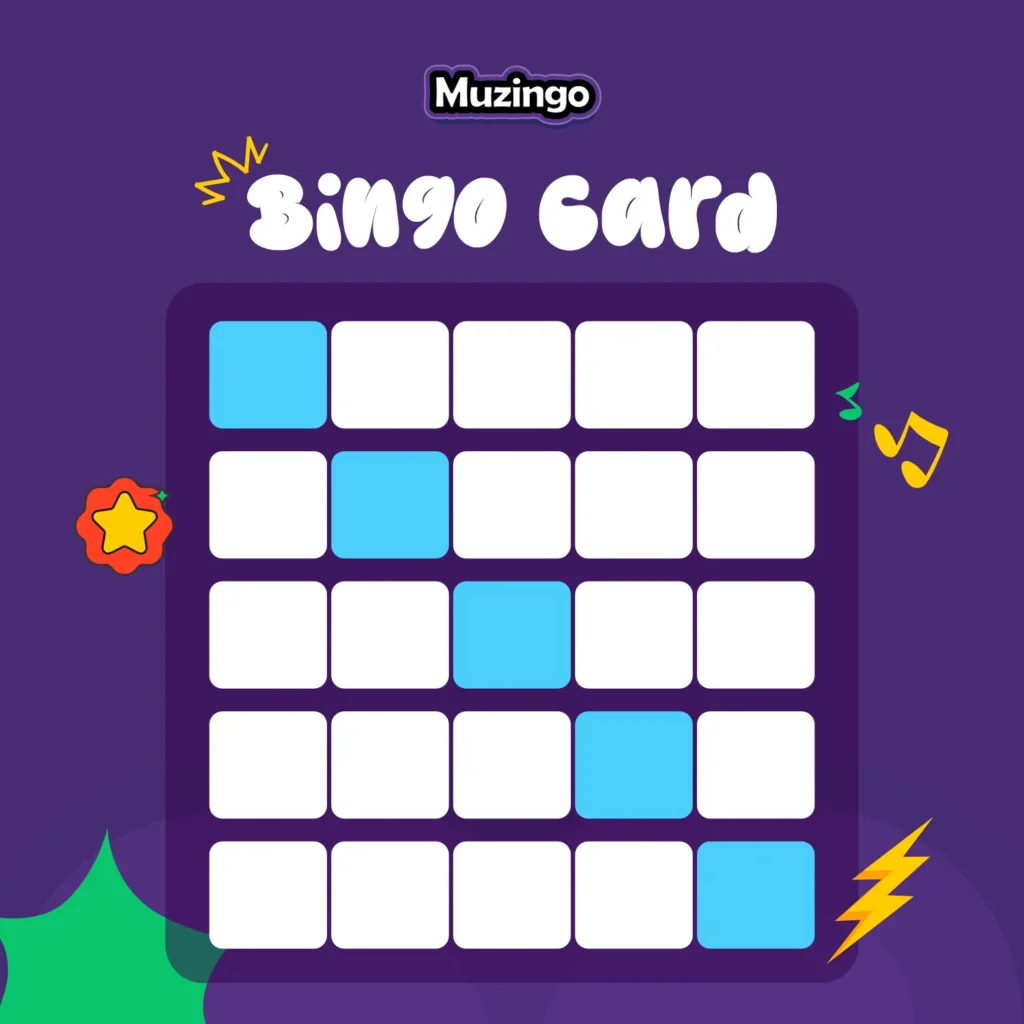
Players receive unique cards.
Cards contain song titles.
Hosts play music clips.
Participants identify songs and match them to their cards.
Five aligned matches trigger the Muzingo button.
The process naturally measures recognition speed.
That makes Muzingo valuable for DJs exploring audience familiarity and listener recall.
The platform effectively transforms music recognition into measurable audience behavior.
Resources such as the Product Walkthrough and How It Works explain the platform structure in greater detail.
Recognition-focused experiences also strengthen social participation. This is one reason How Interactive Music Games Bring Groups Together highlights stronger engagement through shared musical memory.
Why Is Recognition the Ultimate Competitive Advantage?
The music industry contains thousands of technically capable DJs.
Far fewer become unforgettable.
The difference is recognition.
A strong signature sound allows audiences to identify you before they identify your name.
That recognition creates familiarity.
Familiarity strengthens recall.
Recall strengthens loyalty.
Loyalty creates long-term opportunities.
According to research examining repeated exposure and music preference, familiarity remains one of the strongest predictors of musical liking and repeated engagement.
The DJs who build lasting careers rarely succeed because they know more tricks.
They succeed because people remember them.
If listeners cannot recognize your musical identity, your brand remains invisible.
If listeners recognize your sound within seconds, your audience begins carrying your identity for you.
That is the real power of a signature sound.
Ready to test whether listeners truly recognize your style?
Try a music recognition challenge through Muzingo and discover how quickly audiences identify the patterns that make your musical identity memorable.
FAQ
What is a signature sound?
A signature sound is a recognizable musical identity built through recurring patterns in genre choice, energy progression, song selection, emotional atmosphere, and audience experience.
How do audiences recognize DJs so quickly?
Audiences recognize DJs through repeated exposure to familiar musical patterns, emotional consistency, and recurring stylistic cues that strengthen memory and recall.
Can a DJ have a signature sound without producing music?
Yes. DJs can develop recognizable identities through curation, playlist design, genre specialization, and consistent audience experiences.
Why is consistency important in music branding?
Consistency creates familiarity. Familiarity improves recall, recognition, audience trust, and long-term loyalty.
How long does it take to build a signature sound?
The timeline varies, but recognition usually develops through repeated audience exposure across multiple performances rather than a single event.