Leaderboard divisions are ranking tiers used in competitive games to group players based on performance and skill level. In competitive music games, these divisions ensure fair matchmaking, track progress, and create a structured system where players can move up or down based on their scores and consistency.
You might think you are good at music games until you see where you actually rank. Leaderboard divisions remove guesswork. They show you, clearly, whether you are improving or falling behind.


What Is a Leaderboard?
A leaderboard is a ranking system that displays players based on their performance in a game. It shows who is leading, how players compare to one another, and where each participant stands at any given time.
The meaning of a leaderboard goes beyond a simple score list. It is a structured way to measure skill, consistency, and improvement over time. In music games, leaderboards track how accurately and quickly players recognize songs, recall patterns, and respond under pressure.
If you are new to music-based games, understanding
👉 the basics of music bingo
provides a clear foundation for how scores and outcomes are generated.
What Are Leaderboard Divisions?
Leaderboard divisions are sub-levels within a leaderboard that group players into tiers based on performance.
Instead of placing all players in a single ranking pool, leaderboard divisions create smaller, more balanced groups. Each division represents a skill level, allowing players to compete against others with similar abilities.
This system makes competition more meaningful. It protects beginners from being overwhelmed and forces advanced players to stay sharp. It also introduces progression, where players can move up to higher leaderboard divisions or drop down if performance declines.


In simple terms, a leaderboard shows your position. Leaderboard divisions show your level.
How Leaderboard Divisions Work in Competitive Music Games
In competitive music games, leaderboard divisions operate through a combination of scoring, ranking, grouping, and movement.
First, scoring determines performance. Players earn points based on how quickly and accurately they identify songs, artists, or patterns. Speed, recall, and precision all contribute to the final score.
Next, ranking organizes players. Scores are compared across participants, and each player is placed relative to others.
Then, grouping assigns players into leaderboard divisions. Instead of one large leaderboard, players are placed into tiers such as beginner, intermediate, or advanced divisions based on their performance level.
Finally, promotion and relegation control movement between leaderboard divisions. Players who consistently perform well move up to higher divisions. Those who struggle may move down, ensuring balance across all tiers.


Here is what that looks like in practice.
You enter a round and recognize the song instantly. You score high. You repeat that across multiple rounds. Your consistency pushes you above others in your group.
At the end of the cycle, you move up a leaderboard division.
Now everything changes.
Players react faster. Mistakes are punished immediately. You hesitate for one second and lose your position. You recognize fewer songs before others do. Your rank drops.
This is where most players realize the truth. Knowing music is not enough. Speed, recall, and decision-making determine whether you climb or fall.
Understanding
👉 how music bingo rules shape scoring and outcomes
helps clarify this system further.
Why Leaderboard Divisions Exist
Leaderboard divisions exist to improve the competitive experience.
They create fairness by matching players with others at similar skill levels. This prevents frustration for beginners and removes easy wins for advanced players.
They increase motivation by giving players clear targets. Moving up a leaderboard division feels earned. Staying there requires consistent performance.
They create pressure. When your position is visible, every round matters. Every delay costs you points. Every mistake affects your ranking.
They support retention by keeping the challenge balanced. You are always close enough to win, but never comfortable.
They also enhance social interaction. Competitive structures encourage participation, shared experiences, and group engagement, which are key elements in
👉 how interactive music games bring players together
How Players Move Between Leaderboard Divisions
Movement between leaderboard divisions is based on performance over time.
Players move up leaderboard divisions when they consistently outperform others. Not once, not occasionally, but repeatedly. Strong recall, fast reactions, and accuracy drive this upward movement.
Take Your Game Nights to the Next Level
Muzingo is a fun game where players listen to music tracks and match them to bingo cards — competing to win prizes with friends.
Play Muzingo FreeNo Card Required
Players move down leaderboard divisions when performance drops. Slower reactions, missed recognitions, and inconsistent play quickly push you lower.
There is no hiding in this system.
If you stay in the same division, it means your performance matches that level. If you drop, it means others are adapting faster than you.
Climbing leaderboard divisions requires improvement. Staying there requires discipline.
What Makes a Good Leaderboard System?
A good leaderboard system is built on clarity, balance, and competitiveness.
Clarity ensures that players understand how scores are calculated and how rankings change. Without transparency, progression feels random and unfair.
Balance ensures fair competition. Leaderboard divisions should group players accurately so that each match feels challenging and winnable.
Competitiveness creates tension. A strong system rewards skill and exposes weakness. It pushes players to improve or fall behind within leaderboard divisions.
When these elements work together, the leaderboard becomes a pressure system that shapes how players think, react, and perform.
How Muzingo Uses Leaderboard Divisions
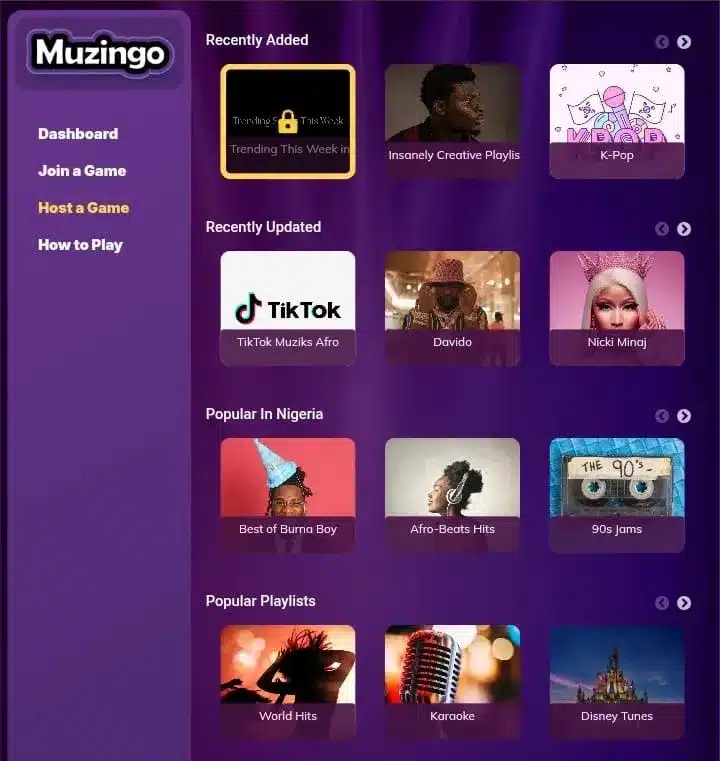
Muzingo uses leaderboard divisions to create a structured and engaging competitive experience.
Players are ranked based on their performance in music-based challenges, then grouped into leaderboard divisions that reflect their skill level. This creates fair competition and real progression.
As players improve, they move up through leaderboard divisions and face stronger opponents. Each division demands faster thinking, sharper memory, and better decision-making.
This is where the difference becomes obvious.
Some players recognize songs. Others recognize them faster. That difference determines who climbs.
To understand this better, explore
👉 how Muzingo’s system works
If you are ready to test yourself, start with
👉 how to play music bingo online
and experience leaderboard divisions in real time.
See how your performance compares in a real game environment.
Start Competing and Climb the Rankings


Leaderboard divisions turn gameplay into a visible ranking of your ability.
They show where you stand. They expose your weaknesses. They reward improvement.
Some players stay stuck. Others adapt and climb.
The difference is not luck. It is performance.
See how your taste performs in a real game.
👉 Start playing music bingo for free
Frequently Asked Questions
What is a leaderboard?
A leaderboard is a ranking system that displays players based on their performance in a game, showing how they compare to others.
What are leaderboard divisions?
Leaderboard divisions are tiers within a leaderboard that group players based on skill level, allowing for fair and balanced competition.
How do leaderboard rankings work?
Leaderboard rankings are determined by player performance, including scores, speed, accuracy, and consistency over time within leaderboard divisions.
Why are leaderboards important in games?
Leaderboards create competition, motivate players to improve, and provide a clear sense of progression through leaderboard divisions.
How do you move up a leaderboard?
You move up a leaderboard by consistently achieving high scores, maintaining strong performance, and outperforming other players in your leaderboard division.