
You promote the event. Members react with emojis. The reminder goes out. The event starts. Half the room shows up. Five people speak. The rest watch silently.
This is not a promotion problem. It is a participation architecture problem.
Most online community events fail because they rely on energy instead of structure. You can have 5,000 members inside Slack, Discord, Circle, Mighty Networks, or Geneva. If the format increases friction or social risk, participation collapses.
High-performing online community events reduce friction, create identity signaling, define rules, and generate shared memory.
Participation follows structure.
RELATED BLOG POST
- ONLINE COMMUNITY ENGAGEMENT: WHY MOST COMMUNITIES TURN INTO GRAVEYARDS AFTER 90 DAYS
- HOW TO INCREASE COMMUNITY ENGAGEMENT AND ACTIVATE GHOST MEMBERS
- HOW TO MONETIZE YOUR ONLINE COMMUNITY EVENTS INTO REVENUE STREAMS
- HOW TO RUN ONLINE EVENTS WITHOUT BURNING OUT AS A COMMUNITY MANAGER
Why Most Online Community Events Underperform
Digital community managers operating Slack communities, Discord servers, SaaS user groups, creator memberships, and founder networks often assume more online community events equal more engagement.
They do not.
Participation increases when:
- Commitment feels small
- Rules are clear
- Identity is visible
- Exposure risk is low
- There is a shared focal point

Hosting another open discussion call on Zoom does not increase participation. It increases calendar fatigue across your online community events calendar.
The difference between low-performing and high-performing online community events is execution structure.
Below are five formats that consistently increase community participation when installed correctly inside digital-first online community events.
1. Live Micro-Challenges
Micro-challenges are short, time-bound live tasks hosted inside your community platform.
This works particularly well in Slack channels, Discord threads, or Circle event rooms.
What It Is
A 10 to 20 minute live task where members complete one defined action.
Example:
Inside a SaaS Slack community of 2,000 members, the host runs a 15-minute “Landing Page Headline Rewrite Sprint.” Members post one improved headline in a dedicated thread.
How To Execute
Step 1: Announce the challenge 48 hours prior with one clear deliverable.
Step 2: Start the timer live and repeat the rule once.
Step 3: Require public submission in a thread.
Step 4: Highlight 3 strong examples.

Why It Works
- Urgency triggers action.
- Defined deliverable lowers cognitive load.
- Time-boxing reduces commitment fear.
- Public submission creates visible participation.
Micro-challenges increase online event engagement because they replace passive listening with required output inside structured online community events.
In Discord communities, you can layer reactions or roles to increase identity signaling. In Mighty Networks, you can tag contributors. In Geneva, you can isolate topic-based groups.
Participation becomes action-based, not attendance-based.
2. Member Spotlight Battles
This format turns status into engagement fuel.
What It Is
Two members present short, structured showcases. The audience votes.
Example:
In a founder Circle community, two members pitch a product positioning angle. Attendees vote via poll.
How To Execute
Step 1: Pre-select participants and define format rules.
Step 2: Limit each presentation to 5 minutes.
Step 3: Use Discord polls, Slack reactions, or Zoom polling for voting.
Step 4: Publish results immediately.
Why It Works
- Status and identity increase motivation.
- Audience participation exceeds speaker participation.
- Voting lowers exposure risk.
Observer participation rates often exceed 60 percent, even if only 10 percent speak.
This format increases community participation because observers are not passive. They contribute through structured feedback inside competitive online community events.
It is one of the simplest event participation strategies to implement across Slack, Discord, and Mighty Networks.
3. Structured AMA Sessions
Unstructured AMAs fail because silence expands in real time.
Structured AMAs remove chaos.
What It Is
A moderated AMA with pre-submitted questions, categorized themes, and defined time blocks.
Example:
In a Discord creator server with 800 members, the host collects questions 48 hours before the event. Questions are grouped into growth, monetization, and platform strategy.
How To Execute
Step 1: Open a question collection thread two days prior.
Step 2: Curate and categorize submissions.
Step 3: Assign a moderator to read questions.
Step 4: Allocate 3 to 5 minutes per answer.
Why It Works
- Reduces real-time anxiety.
- Eliminates open-mic chaos.
- Creates predictability.
- Increases question volume before event.
In Zoom sessions, this prevents awkward silence. In Slack communities, it increases thread participation before and after the event.
Structured AMAs increase online community events performance because participation is front-loaded and organized.
4. Themed Breakout Rooms
Large group calls increase social risk. Smaller rooms reduce it.
What It Is
Topic-specific breakout sessions with 4 to 6 members per group.
Take Your Game Nights to the Next Level
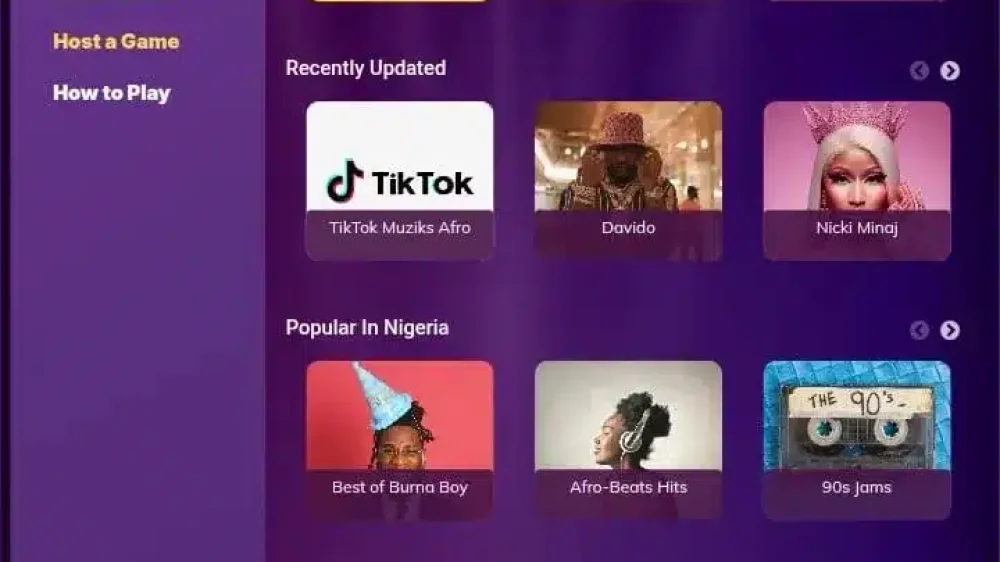
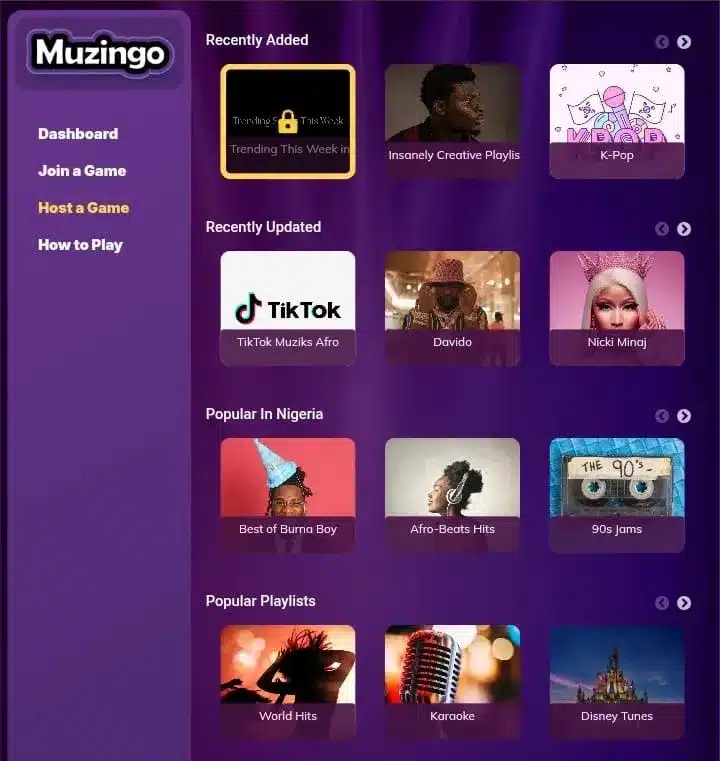
Muzingo is a fun game where players listen to music tracks and match them to bingo cards — competing to win prizes with friends.
Play Muzingo FreeNo Card Required
Example:
A SaaS user group on Zoom divides 60 attendees into 10 breakout rooms, each focused on a feature adoption challenge.
How To Execute
Step 1: Define themes in advance.
Step 2: Assign members intentionally.
Step 3: Appoint one facilitator per room.
Step 4: Require one takeaway per room posted back into Slack or Circle.
Why It Works
- Speaking feels safer in small groups.
- Topic specificity reduces cognitive overload.
- Identity-based grouping increases relevance.
Participation depth increases even if total attendance remains constant.
Virtual community engagement improves because members form micro-connections instead of watching a broadcast inside larger online community events.


5. Interactive Game Nights (Structured Participation Engine)
Most community managers underestimate structured games.
Games work when they are infrastructure, not novelty.
What It Is
A recurring interactive format with defined rules and equal participation mechanics.
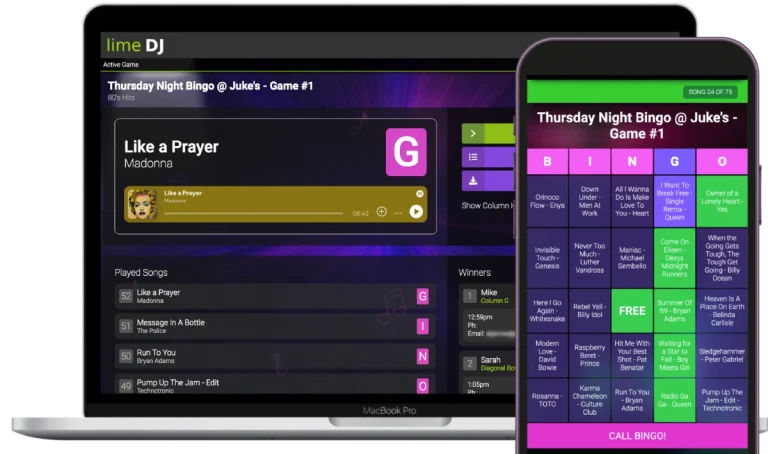
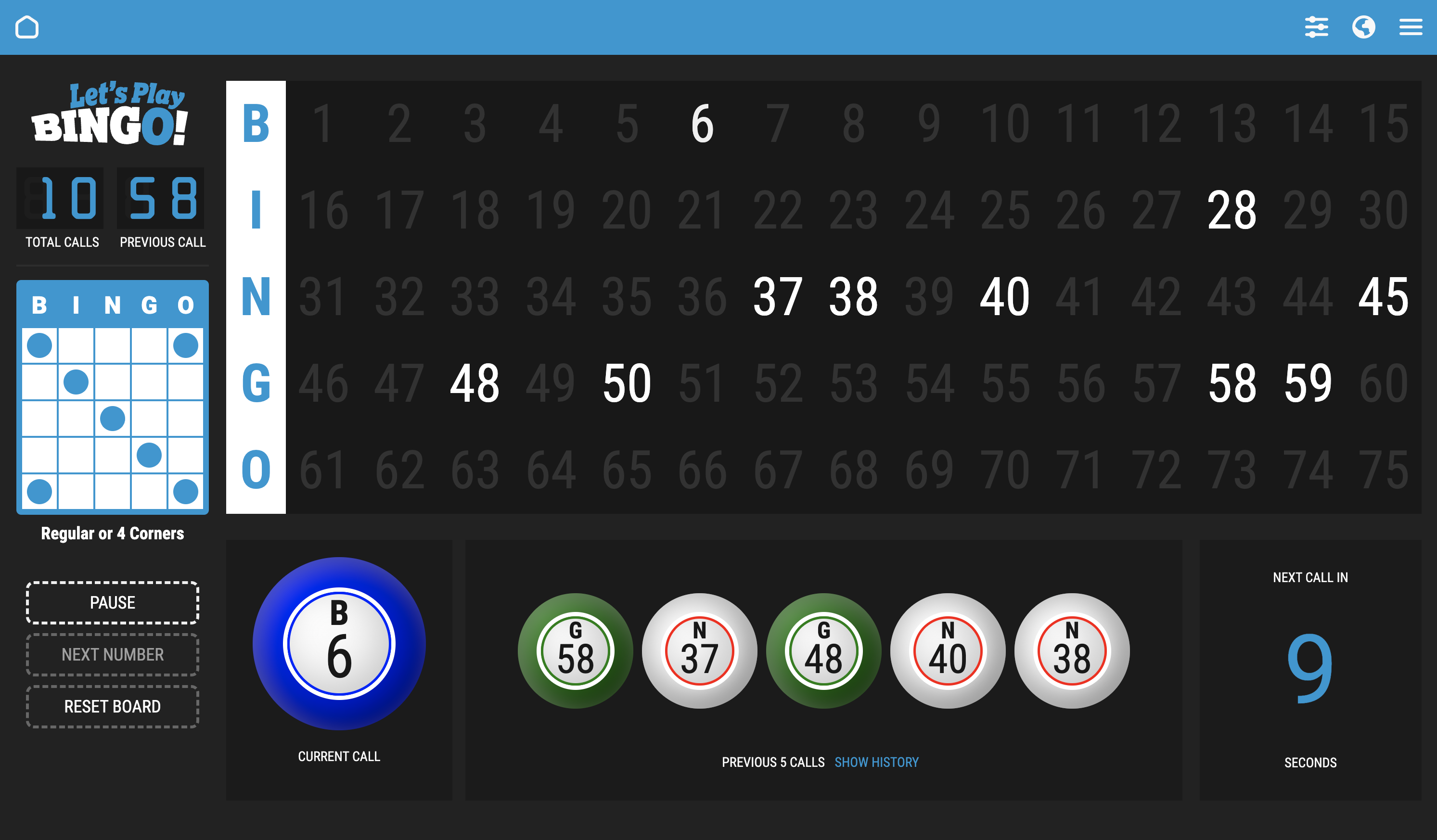
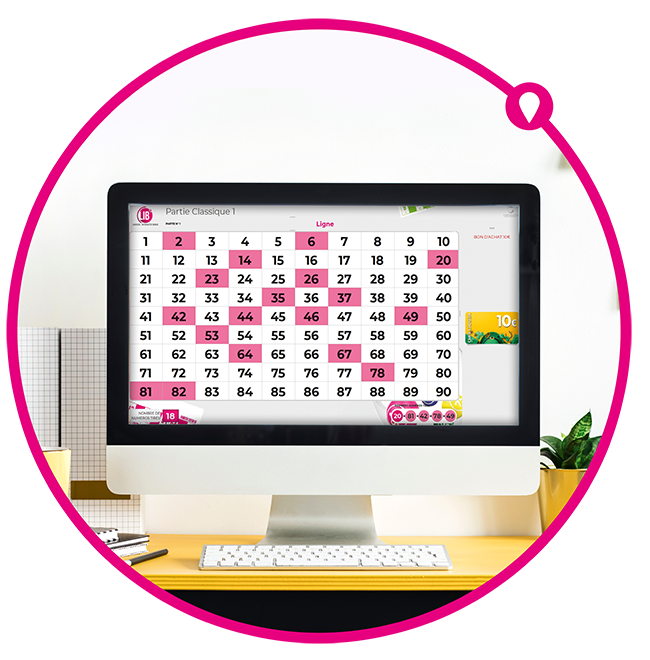
Music bingo is a strong example. If you are unfamiliar with the format, see What Is Music Bingo.
Unlike open discussions, interactive games shift the focal point from the speaker to the shared activity.
How To Execute
Step 1: Install a recurring monthly date.
Step 2: Announce participation rules clearly.
Step 3: Use a structured platform such as Muzingo.
Step 4: Track engagement metrics before and after.
If you need execution guidance, review How to Host a Music Bingo Night Unforgettable and Tools Music Bingo Host Should Know About.
Why It Works
- Clear rules lower hesitation.
- Everyone participates simultaneously.
- No one is singled out.
- Built-in anticipation increases return rate.
Interactive formats convert passive members into active participants without forcing verbal exposure.
For communities evaluating infrastructure, understanding How It Works clarifies how repeatable systems increase engagement predictably inside recurring online community events.
Game-based online community events are not entertainment. They are participation engines.
Why Online Community Events Fail Even When the Format Is Good
Even strong community event ideas fail without rhythm.
Common breakdowns:
- No recurring schedule
- No baseline metrics
- No ritualization
- No measurement
- No reinforcement cycle
High-performing online community events are installed as infrastructure.
They recur.
They are measured.
They are optimized.
Without rhythm, even strong virtual event ideas lose momentum in long-term online community events.
Performance Measurement Framework
If you are accountable for engagement metrics, measure your online community events structurally.
Before Event
- Weekly active members
- RSVP rate
- Average comment count
During Event
- Attendance percentage
- Participation rate
- Reaction volume
- Message velocity
After Event
- Retention delta
- Next-event RSVP conversion
- Repeat participant ratio
Without measurement, improvement is guesswork.
When you install recurring interactive formats, you can correlate participation increases directly to structure inside your online community events strategy.
If revenue is part of your strategy, review How to Monetize Music Bingo for practical monetization mechanics.
The Structural Advantage of Music Bingo
Music bingo works inside online communities because:
- It has clear rules.
- It requires no creative preparation from members.
- It distributes participation evenly.
- It builds shared memory.
It fits Slack, Discord, Zoom, and Circle environments seamlessly.
For a deeper understanding of how interactive formats build connection, read How Interactive Music Games Bring Groups Together.
When installed as a recurring ritual, it becomes a predictable participation driver for online community events.
The Core Truth
Participation does not increase because you host more online community events.
Participation increases when:
- Friction is reduced
- Identity is visible
- Rules are clear
- Ritual is installed
- Measurement is enforced
Structure creates consistency.
Consistency creates trust.
Trust creates participation.
If you want online community events that dramatically increase participation, install structured interactive rituals inside your community.